I Am Earth, and I Am of Her

On belonging, ecological grief, and remembering our relationship with the living world.
There was a time when I carried a great deal of grief for the Earth.
Grief for what we are losing. For the ways we live, consume, disconnect, and sometimes seem to forget that we are part of something far greater than ourselves.
And yet, something in my relationship with the Earth has been changing.
Recently, during my Gestalt training, we were invited to reflect on climate emergence. As I sat with the topic, I noticed something unexpected.
I wasn't feeling the same grief I had once carried.
Instead, I felt hope.
Not because I believe everything will be fine. Not because I am unaware of the suffering, destruction, and uncertainty unfolding around us.
But because I have begun to experience my relationship with the Earth differently.
I wrote in my journal:
“When I feel the mother, I don't feel as separate as I used to be.”
And perhaps that is where this reflection begins.
Remembering That We Belong
For much of our modern lives, we are taught to experience ourselves as separate.
Separate from nature. Separate from one another. Separate, sometimes, even from our own bodies.
We speak about the environment as though it exists somewhere outside of us.
Something we visit. Something we protect. Something we use.
But what happens when we begin to experience the Earth not as something outside ourselves, but as something we belong to?
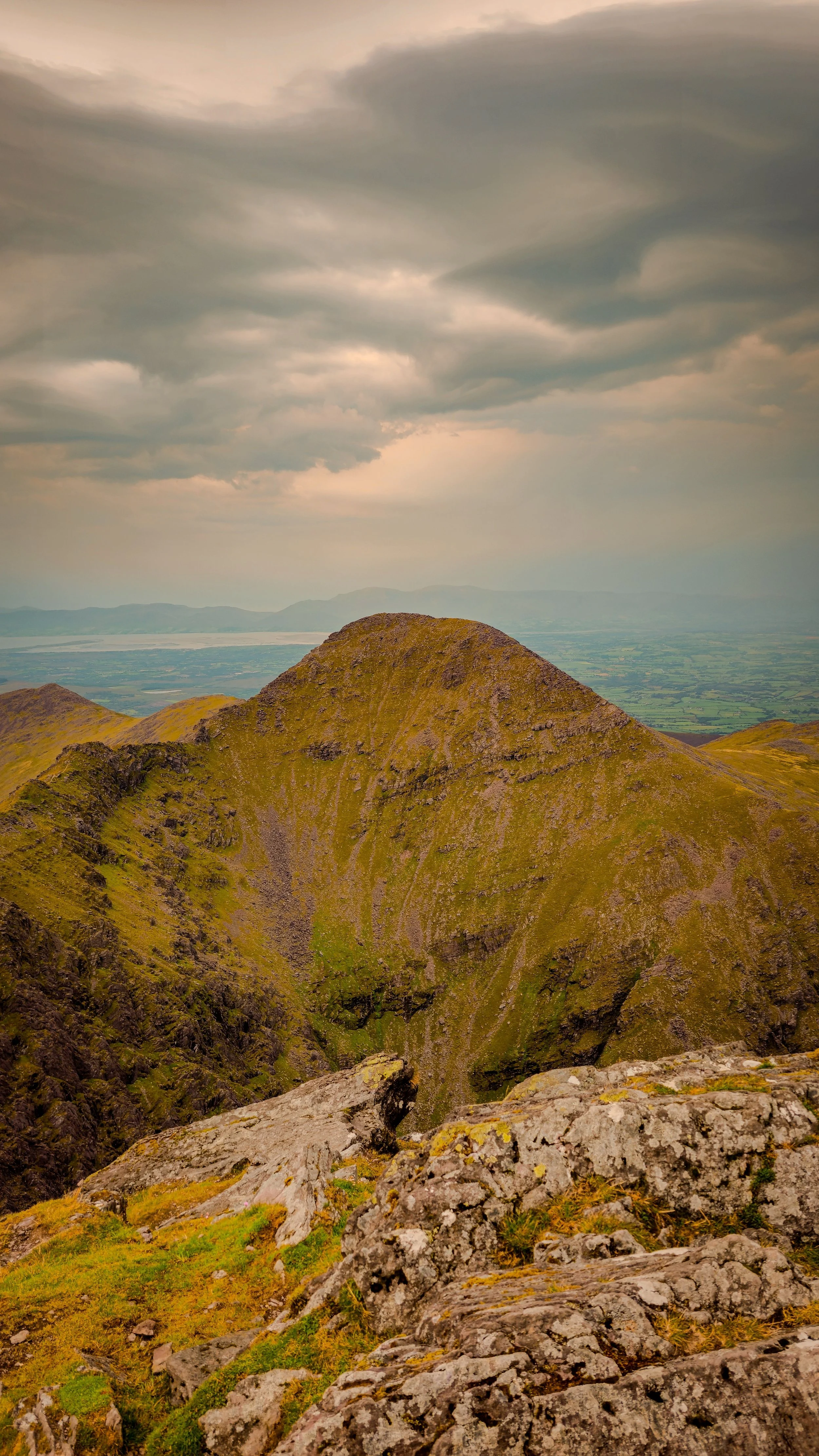
When I sit with the ground beneath me, when I feel the air entering my lungs, when I notice the warmth of the sun against my skin, I am reminded of a relationship that has always been there.
I do not exist independently of the world around me.
The air I breathe, the water I drink, the food that nourishes me, the rhythms of light and darkness that shape my days — all of them connect my life to the living world.
And beyond this physical dependence, there is something I experience spiritually.
A sense of being held within a much larger existence.
I am Earth, and I am of her.
I know this intellectually, but I am still learning what it means to feel it.
When the World Reflects Something Within Us
As I continued writing, I found myself wondering about the relationship between how we treat the Earth and how we treat ourselves.
How often do we override our own limits?
How often do we ignore exhaustion, silence discomfort, or demand more from ourselves than we can sustainably give?
And how often do we approach the natural world with a similar expectation?
To produce more. Give more. Sustain more.
Without sufficient space for renewal.
I don't believe ecological destruction can be explained simply through our individual relationship with our bodies. There are political, historical, and economic systems shaping the world we inhabit.
Yet I find myself curious about the patterns that exist across these different levels of life.
The ways we have learned to disconnect from our own needs.
The ways we have learned to separate ourselves from the consequences of our actions.
The ways we sometimes forget that life exists through relationships.
For me, this raises a question:
What might change if we began to understand care for ourselves, care for one another, and care for the Earth as interconnected practices?
Grief, Hope, and the Uncertainty of Our Future
I used to experience ecological grief quite strongly.
And I know that grief may return.
There are realities in our world that deserve our sorrow, our attention, and our action.
But something I have noticed is that hope does not necessarily require certainty.
I can feel hopeful without knowing what the future holds.
I can recognise the seriousness of ecological crises while also witnessing the many ways people are beginning to live differently.
I see people growing their own food, composting, learning traditional skills, and becoming more conscious of the resources they consume.
I see a growing curiosity about ancestral knowledge, community resilience, and ways of living that acknowledge our dependence on one another.
These changes do not erase the scale of the challenges we face.
But they matter to me.
Because they remind me that human beings are capable of learning, adapting, and creating new relationships with the world around them.
In my journal, I wrote about feeling hopeful whether or not humanity ultimately finds a way through everything we are facing.
It is a difficult thought to express.
There is something humbling about recognising that the Earth has existed long before us and may continue long after us, even though the living world itself is being profoundly changed by human activity.
My hope is not rooted in a belief that nothing can be lost.
So much can be lost.
My hope comes from love.
From my relationship with the Earth, and from the possibility that this love might continue to shape how I live.
The Wisdom of Remembering
I often find myself returning to the subject of ancestral wisdom.
Not because I believe the past was a perfect place, or that every ancestral tradition should be revived.
But because I wonder what forms of knowledge have been lost or forgotten as our ways of living have changed.
Knowledge of seasons.
Of plants and landscapes.
Of gathering, sharing, repairing, and making use of what is available.
Of understanding that survival has often depended upon cooperation rather than individual independence.
There are many Indigenous communities and knowledge traditions that continue to hold deep relationships with land and place, each with its own history and teachings.
I believe there is much to learn through respectful listening, without assuming that these different traditions are interchangeable or ours to claim.
And I also wonder about the wisdom within our own family histories.
What did our grandparents know about growing food, preparing meals, caring for one another, or living with the seasons?
What knowledge was passed down?
What was interrupted?
What might still be remembered?
Perhaps reconnecting with ancestral wisdom is not only about looking backward.
Perhaps it can also help us imagine different ways of living now.
Beginning Within Our Own Lives
When I think about the scale of ecological challenges, I can easily become aware of how small my individual life is.
I am one person.
One body.
One life within an immeasurably larger web of relationships.
And yet, I don't experience that smallness as meaninglessness.
I find something freeing in it.
I do not have to carry responsibility for the entire world.
But I can take responsibility for how I participate in the relationships that are mine to tend.
How I care for my body.
How I raise my children.
How I relate to the people around me.
How I consume, waste, share, and give back.
How I bring awareness into my work and the spaces I hold with others.
These actions are not substitutes for wider collective and systemic change.
But they are places where my values become lived experience.
And perhaps this is one way I understand hope.
Not as the expectation of a particular outcome, but as a willingness to remain in relationship with life.
To care even when the future is uncertain.
To participate even when my contribution feels small.
To love without knowing what will happen.
Coming Home to the Earth
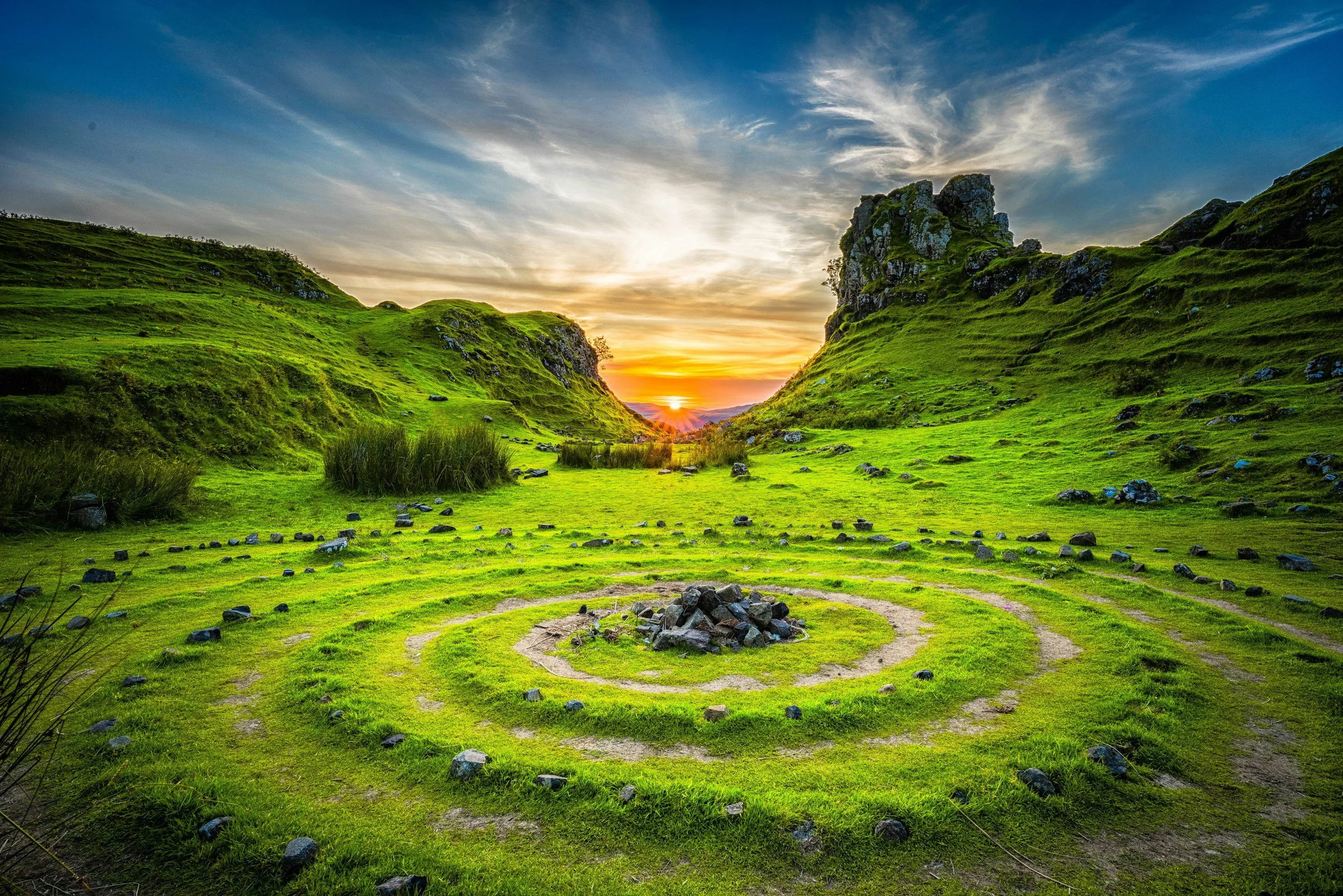
As I return to my journal, I am struck by how much my relationship with the Earth has become a relationship with belonging.
I am learning to feel less separate.
Less like someone standing outside the natural world, looking in.
And more like a living being among countless other living beings.
Dependent. Connected. Temporary.
Part of something that existed before me and will continue beyond my lifetime.
There is grief in that awareness.
But there is also gratitude.
And a deep, quiet sense of love.
I don't know what the future will bring.
I don't know what humanity will choose, or what the Earth will look like generations from now.
But I know that I want to remain connected.
To listen.
To remember.
To care.
And to let that relationship shape the way I live.
Because perhaps we do not need to learn how to belong to the Earth.
Perhaps we need to remember that we never stopped belonging.
An invitation to reflect
When do you feel most connected to the living world?
And what changes when you experience nature not as something separate from you, but as something you are part of?
With warmth,
Nallely